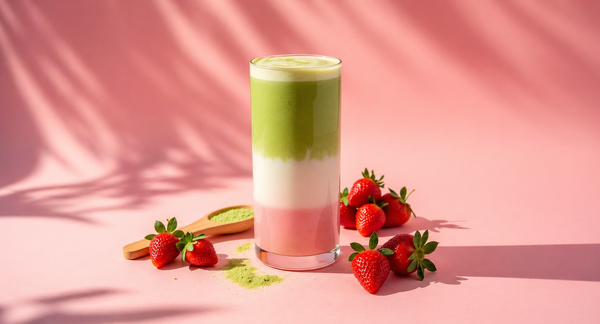
To make a matcha latte at home, sift 1 tsp of ceremonial grade matcha into a bowl, whisk with 2 tbsp of hot water (not boiling around 70–80°C) until smooth and frothy, then pour into your warm or cold frothed milk of choice. That's your perfect matcha latte, done in under 5 minutes.
Before You Whisk, Know This
What is a Matcha Latte? A matcha latte is a creamy drink made by whisking ceremonial grade matcha powder with hot water to form a smooth paste, then combining it with steamed or cold frothed milk. Unlike regular green tea, it uses the whole leaf so every sip is richer, greener, and more nourishing.
How to Make Matcha Latte at Home The Right Way
You've seen it all over your feed that gorgeous, glowy green drink sitting pretty on someone's morning table. And honestly? You deserve that too.
Learning how to make matcha latte at home is easier than you think no barista skills, no fancy machines. Just good matcha, warm milk, and a little wrist action.
The secret most people miss? It's all in the quality of your matcha powder and the temperature of your water. Get those two right and your matcha latte recipe at home will actually taste better than the coffee shop version smoother, creamier, and without the sugar overload.
At CHÃ Wellness, we source Ceremonial Grade AAA Japanese Matcha directly from Japan no fillers, no additives so you're working with the real thing every single time.
Ready to make your new morning bestie? Let's get into it.
What Do You Need to Make a Matcha Latte at Home?
What you'll need:
- 1 tsp CHÃ Wellness ceremonial grade matcha
- 2–3 tbsp hot water (70–80°C not boiling)
- 150–200 ml milk of choice (oat, almond, whole all work)
- Sweetener of choice honey or maple syrup (optional)
- A bamboo whisk (chasen) or small hand frother
- A fine mesh sifter
CHÃ tip: Always use ceremonial grade for lattes. Culinary grade is more bitter and designed for baking not for sipping.
The Perfect Matcha Latte Recipe at Home Step by Step
Step 1: Sift Your Matcha
Sift 1 tsp of matcha powder through a fine mesh sieve into your bowl or mug. This breaks up clumps before you even start whisking. Skip this and you'll end up with lumps no one wants that.
Step 2 : Add hot water (not boiling)
Pour 2–3 tbsp of water heated to around 70–80°C over the sifted matcha. Boiling water scorches the matcha and turns it bitter, so let your kettle sit for 2 minutes after boiling.
Step 3 : Whisk in a W-motion
Whisk briskly in a W or zigzag motion not circular. Do this for 20–30 seconds until the matcha is smooth, dissolved, and slightly frothy on top.
Step 4 : Froth your milk
Warm your milk to around 60–65°C and froth it using a hand frother, French press, or electric frother. Don't overheat it makes the milk taste flat.
Step 5 : Pour and serve
Pour frothed milk into your matcha base. Add sweetener if you like. Dust a tiny pinch of matcha on top for that café finish. Sip. Smile. Repeat.
What's the Best Matcha for a Latte at Home?
Not all matcha is the same and your latte will taste exactly as good as the matcha you put in it.
- Ceremonial Grade: Bright green, smooth, slightly sweet. Best for lattes and drinking as-is. This is what you want.
- Culinary Grade: Darker, more bitter. Great for baking not for your morning cup.
For the best matcha latte recipe, always go ceremonial. CHÃ Wellness sources Ceremonial Grade AAA directly from Japan vibrant, clean, and with no additives. Shop ceremonial grade matcha.
Hot vs. Iced: Which Matcha Latte Recipe at Home Is Right for You?
How to make a hot matcha latte:
Follow all 5 steps above. Use warm frothed milk. Best for slow mornings, mindful sips, and no crash, no chaos energy.
How to make an iced matcha latte:
- Make your matcha paste the same way (Steps 1–3)
- Let it cool for 5 minutes
- Fill a glass with ice
- Pour cold milk over the ice
- Pour your matcha over the top
- Stir gently and enjoy
Same vibe. Just colder. It's giving focus either way.
Why Is My Matcha Latte Bitter or Clumpy?
Common mistakes and how to fix them:
| Problem | Why It Happens | Fix |
|---|---|---|
| Bitter taste | Water too hot | Use 70–80°C water, not boiling |
| Clumpy texture | Skipped sifting | Always sift first |
| Flat flavour | Low-grade matcha | Switch to ceremonial grade |
| Grainy milk | Milk overheated | Keep milk under 65°C |
| Too weak | Not enough matcha | Use a full 1 tsp, not a pinch |
Conclusion
Making a matcha latte at home is simpler than you think and once you nail it, you'll never go back.
3 things to remember:
- Always sift your matcha and use water at 70–80°C never boiling
- Ceremonial grade matcha makes all the difference in taste and colour
- Froth your milk gently it's what gives your latte that creamy, velvety finish
Your perfect matcha latte is one whisk away. And with CHÃ Wellness Ceremonial Grade AAA Japanese Matcha, every cup is clean, smooth, and made with the real stuff straight from Japan, no fillers, no shortcuts.
Frequently Asked Questions
Can I make a matcha latte without a whisk?
Yes, a small hand frother or even a regular kitchen whisk works. Sift your matcha first to reduce clumps, then whisk with hot water before adding milk. A bamboo chasen gives the best froth, but it's not required.
What milk is best for a matcha latte at home?
Oat milk is a fan favourite it froths beautifully and its mild sweetness complements matcha. Almond milk keeps it light. Whole dairy milk gives a richer, creamier texture. Any milk works it comes down to your preference.
How much matcha should I use for a latte?
Start with 1 teaspoon (about 2–3g) per cup. If you want a stronger flavour, go up to 1.5 tsp. Research suggests ceremonial grade matcha may contain around 60–70mg of caffeine per tsp so adjust based on your caffeine sensitivity.
Can I make a matcha latte without hot water?
Not recommended. Hot water is what activates the matcha and creates a smooth paste. Even for iced lattes, whisk the matcha with a small amount of hot water first, then add cold milk and ice.
Is Ceremonial grade matcha really necessary for a latte?
For the best results, yes. Ceremonial grade matcha is smoother, less bitter, and more vibrant in colour. Culinary grade works in a pinch, but you'll need more sweetener to balance the bitterness. For your daily matcha latte recipe, ceremonial is worth it.