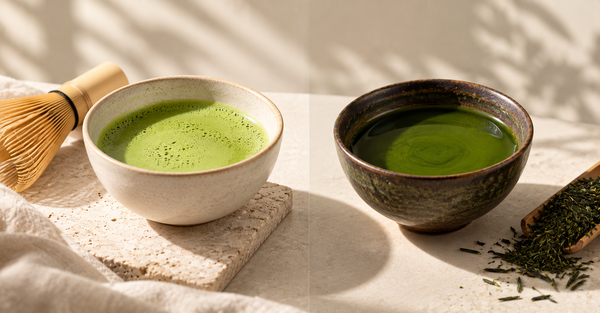
You made your first cup of matcha. You followed the steps. And then you took a sip and thought this is too bitter. This cannot be right.
Here is the truth: you are not wrong. It is not right.
Why is matcha bitter? In almost every case, the answer comes down to one of two things the grade of matcha you are using, or the way you are preparing it. Neither is unfixable. And once you understand exactly what is causing the bitterness, you will never have a bad cup again.
This guide covers everything. The science behind why matcha tastes bitter, the exact fixes, and what a truly good cup of matcha actually tastes like because most people who have given up on matcha have never actually tasted it made properly.
Is Matcha Sweet or Bitter?
The honest answer is: both. But in a very specific balance.
Is matcha sweet or bitter? Real, high-quality ceremonial grade matcha (AAA) has a flavour profile that is naturally sweet, gently earthy, and rich in umami that deep, savoury note that makes the drink feel satisfying in a way that is hard to describe until you taste it. There is a very subtle bitterness underneath all of that, which is normal and actually pleasant. It is part of the complexity.
What is not normal is overwhelming, harsh, flat-out unpleasant bitterness. That is not the natural taste of good matcha. That is a signal that something has gone wrong either with the matcha itself or with how it was made.
If your matcha has been tasting more harsh than smooth, you are not experiencing matcha. You are experiencing a problem with your matcha. There is a difference, and it is fixable.
Why Does Matcha Taste Bitter? The Real Science Behind It
To understand why does matcha taste bitter, you need to understand what matcha is made of at a molecular level.
Matcha contains two compounds that sit on opposite ends of the flavour spectrum:
Catechins are powerful antioxidants specifically EGCG that are naturally present in all green tea. They are responsible for bitterness and astringency. The higher the catechin concentration, the more bitter the tea.
L-theanine is an amino acid that produces the natural sweetness and umami in matcha. It is what balances the catechins and creates that smooth, calm flavour that good matcha is known for. L-theanine is also the compound responsible for matcha's calm, focused energy the reason matcha feels so different from coffee.
In high-quality ceremonial grade matcha (AAA), L-theanine dominates. The sweetness and umami it produces softens and balances the catechin bitterness so completely that the overall experience is smooth and pleasant.
In low-grade matcha, catechins dominate. L-theanine is lower. The bitterness has nothing to balance it out, and the result is the harsh, flat cup that puts most people off matcha entirely.
This is the root cause. Everything else water temperature, technique, storage is secondary to the fundamental chemistry of the matcha you are using.
The 5 Real Reasons Your Matcha Is Bitter

Reason 1: You Are Using the Wrong Grade of Matcha
This is the cause in the majority of cases. Culinary grade matcha is made from older, later-harvest leaves that are higher in catechins and significantly lower in L-theanine. It is designed to hold up against other strong ingredients in recipes and baked goods not to be drunk plain. In hot water with nothing else, it tastes harsh and bitter because it was never intended for that purpose.
Ceremonial grade matcha (AAA) is made from the youngest first-flush leaves, shade-grown for 20 to 30 days to maximise L-theanine and chlorophyll. The L-theanine content is dramatically higher, the catechins are naturally balanced, and the result is a cup that is smooth, naturally sweet, and genuinely pleasant without anything added.
If you have been drinking culinary grade matcha in plain water and wondering why it tastes so bitter that is your answer. You have been using the wrong grade for the wrong purpose.
Reason 2: Your Water Is Too Hot
This is the second most common cause of bitter matcha and the easiest to fix.
Boiling water 100°C destroys L-theanine. It breaks down the amino acid that creates sweetness and umami and leaves behind the catechins, which produce bitterness. The result is a cup that is harsh and flat no matter how good the matcha grade is.
The correct water temperature for matcha is 80°C. Not 90°C. Not almost boiling. Exactly 80°C.
Boil fresh water and let it rest for 3 to 4 minutes. That brings it down to approximately 80°C. If you have a temperature-controlled kettle, set it and forget it. This single change alone transforms the taste of a cup dramatically.
Reason 3: Your Matcha Is Old or Stored Incorrectly
Matcha is a living powder. Once opened, it oxidises rapidly when exposed to air, light, and heat. As it oxidises, the L-theanine degrades first leaving behind a higher ratio of catechins and the result is an increasingly bitter, flat, dull-tasting cup.
Fresh ceremonial grade matcha (AAA) should be vivid emerald green. If your matcha has gone yellowish, olive, or dull, it has oxidised. The colour change is the clearest visible signal of degradation, and the taste will confirm it.
Store your matcha in an airtight, opaque container away from heat and light. Consume within 4 to 6 weeks of opening. Buy from brands that stone-grind in small batches and pack with nitrogen sealing to preserve freshness from the moment of grinding.
CHA organic matcha powder is packed in small batches to preserve maximum freshness so every tin that reaches you is at peak colour, peak flavour, and peak L-theanine content from the first sip to the last.
Reason 4: You Used Too Much Powder
More matcha does not mean more flavour. It means more catechins per cup, which means more bitterness.
The correct ratio is 1 teaspoon approximately 2 grams of matcha per 60 to 80ml of water. Using 2 teaspoons in the same amount of water doubles the catechin concentration and creates a cup that is dense, grassy, and overwhelmingly bitter even with good ceremonial grade matcha (AAA).
Start with 1 teaspoon. Adjust water volume before adjusting powder quantity.
Reason 5: You Did Not Whisk Properly
Matcha that is not fully dissolved in water creates clumps of concentrated powder that release intense bitterness in certain sips even if the overall cup should taste smooth.
Sift the matcha before whisking. This breaks up clumps before they meet water. Then whisk in a W motion back and forth, not in circles for 20 to 30 seconds until fine foam forms on the surface. Proper whisking distributes the powder evenly, emulsifies it with the water, and produces a smooth, consistent flavour in every sip.
What Does Matcha Taste Like When It Is Made Properly?
Most people who ask what does matcha taste like have only ever had bitter matcha. So their reference point is wrong.
Here is what good matcha actually tastes like:
The first note is earthy and vegetal fresh, clean, grassy in the best possible way. Then the sweetness comes through. Not sugary sweetness a natural, gentle sweetness from the L-theanine that coats the palate softly. Then the umami that deep, savoury note that makes the drink feel full and satisfying in a way that water alone never could.
The bitterness, when made with ceremonial grade matcha (AAA) at the right temperature, is barely present. It is a background note part of the complexity rather than the dominant experience.
If your matcha has been tasting nothing like this, you have not had real matcha yet. And the difference, when you taste it properly for the first time, is genuinely surprising.
How to Make Matcha Less Bitter: The Complete Fix List
How to make matcha less bitter follow these in order, starting with the most impactful:
Fix 1: Switch to ceremonial grade matcha (AAA) This is the permanent, complete solution. Not a workaround. Not a mask. The actual fix. Ceremonial grade matcha (AAA) is naturally smooth and slightly sweet bitterness is not the dominant note because the L-theanine content is high enough to balance the catechins. Everything else on this list is a technique improvement. This is a foundation improvement. Do this first.
Fix 2: Use water at exactly 80°C Let boiled water rest for 3 to 4 minutes before using. This alone will noticeably reduce bitterness in any grade of matcha. A temperature-controlled kettle removes the guesswork entirely.
Fix 3: Sift before you whisk One extra step that takes ten seconds. Sifting breaks up clumps before they form concentrated bitter pockets in your cup. Use a fine mesh sieve directly over your bowl before adding water.
Fix 4: Use the correct ratio 1 teaspoon of matcha to 60 to 80ml of water. No more. Adjust volume if the flavour is too strong do not add more powder.
Fix 5: Whisk in a W motion for 20 to 30 seconds Back and forth, not circular. Full emulsification of the powder produces a consistent, smooth cup rather than uneven pockets of intensity.
Fix 6: Use filtered water Hard tap water contains minerals and chlorine that interact with matcha's compounds and amplify bitterness. Filtered or soft water lets the natural sweetness come through cleanly.
Does Matcha Taste Bitter Even in a Latte?
Yes, if the matcha grade is wrong or the preparation is off, bitterness comes through even with milk.
Does matcha taste bitter in a latte? A common misconception is that oat milk or any milk will cover the bitterness of low-grade matcha. It softens it, but it does not eliminate it. People who find their matcha lattes still taste harsh despite adding milk are almost always using culinary grade matcha and the milk is not able to fully compensate for the fundamental bitterness of the wrong grade.
With ceremonial grade matcha (AAA) whisked correctly at 80°C, oat milk does not need to cover anything. It adds creaminess to a drink that is already smooth and naturally sweet. The result is a latte that tastes genuinely good rather than a latte that tastes tolerable.
The CHÃ Difference: Why AAA Grade Changes Everything
Most brands sell ceremonial grade matcha. Not all ceremonial grade matcha is the same.
CHÃ sources exclusively Ceremonial Grade AAA Matcha the highest tier within the ceremonial grade category. AAA grading means the strictest leaf selection criteria of any grade available, the longest shading window before harvest, the finest stone-grinding process, and the highest L-theanine concentration per gram.
The practical result: CHÃ AAA matcha has a naturally higher L-theanine to catechin ratio than standard ceremonial grade matcha. Which means it is naturally sweeter, smoother, and further from bitterness than anything a standard ceremonial grade label guarantees.
Co-founders Kritia and Maria source directly from Shizuoka farms verifying the harvest timing, the shading duration, and the stone-grinding process before a single gram reaches a CHÃ tin. Every batch is tested. Every tin is packed to preserve the freshness that keeps L-theanine intact from the farm to your bowl.
Looking for the best matcha powder in India that is genuinely smooth and naturally sweet? This is where the search ends.
And if you want the complete matcha ritual the AAA ceremonial grade matcha, the bamboo chasen, the sieve, everything you need to make a perfect cup from day one the best Japanese matcha powder CHÃ Ritual Kit has everything in one place. Start right. Taste the difference from your very first cup.