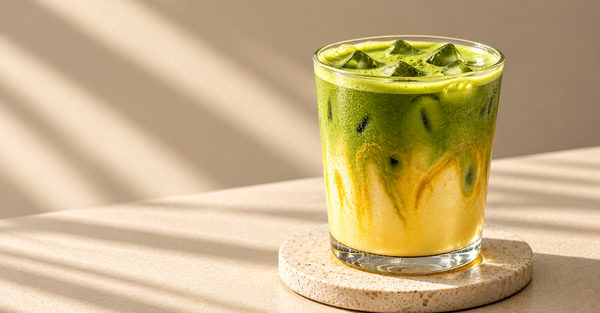
Collagen has made its way into everything, from coffee to gummies to that shiny tub next to your protein powder. And now it's in matcha. So can you put collagen in matcha, and is a matcha collagen drink actually worth the effort?
Short answer: Yes, you can, and it might be worth it for some people. But the honest version is a bit more nuanced than the labels suggest, so here's what the evidence says, followed by a simple recipe if you decide to try it.
What Collagen Actually Is
Collagen is a protein your body makes on its own, and it's a major part of your skin, joints, bones and connective tissue. Collagen powders are usually hydrolysed, which means the protein has been broken into small pieces called peptides so it dissolves easily in hot or cold drinks. Most are unflavoured and nearly tasteless, which is why they slip into a latte without much fuss.
Matcha Collagen Benefits: What the Evidence Actually Says
Here's where we'd rather be honest than exciting.
- Skin: Some studies suggest daily collagen peptides may modestly improve skin elasticity and hydration
- Joints: Some research suggests they may ease mild joint discomfort. One randomised trial of 182 adults found that 5 g a day for 12 weeks reduced pain during everyday activities compared with a placebo
- Timing: Where benefits show up, they usually take about 8 to 12 weeks of daily use, and the amounts studied are typically around 5 to 10 g a day
- The limits: It won't reverse advanced arthritis or deep wrinkles, and many trials are small or short. Researchers also point out that skin studies often combine collagen with other nutrients like vitamin C, so it's hard to credit collagen alone
What about the matcha part? Matcha brings caffeine, L-theanine and antioxidants of its own, but it doesn't add any collagen. You'll sometimes hear that matcha's antioxidants protect the collagen in your skin. That's an interesting theory, not a proven result, so treat it as a bonus and not a promise.
So is a collagen matcha latte worth trying? If you like the taste, want an easy way to fit collagen into your day, and are happy to be patient for a couple of months, sure. If you're expecting a quick transformation, you'll probably be disappointed.
Can You Put Collagen in Matcha?
Yes, and a matcha collagen drink works better than you might expect.
- Heat: Hydrolysed collagen peptides are generally described as stable at normal hot drink temperatures. Matcha only needs water at 70 to 80 degrees Celsius, so there's no need to worry about ruining anything
- Mixing: Collagen dissolves best in hot liquid, so stir it into your hot matcha first, even if you're making an iced drink
- Taste: Unflavoured collagen barely changes the flavour, so the matcha still tastes like matcha
Matcha Collagen Recipe: What You Need
This matcha collagen drink makes one latte.
- 1 teaspoon ceremonial grade matcha powder (about 2 grams)
- 60 ml water at 70 to 80 degrees Celsius
- 1 scoop of unflavoured hydrolysed collagen peptides (follow the pack, usually 5 to 10 g)
- 150 to 200 ml milk of your choice, warm or cold
- Sweetener, optional
Because collagen is nearly flavourless, the matcha carries the whole drink, so quality matters. A smooth, vivid powder like Chã's ceremonial grade matcha gives you a clean, non bitter base, while a dull, harsh one will taste worse the moment milk and collagen are added.
Pick a collagen product from a brand you trust, ideally one that's been third party tested for purity.
How to Add Collagen to Matcha, Step by Step
- Sift the matcha into a bowl and add the hot water
- Whisk in a quick W motion until smooth and frothy
- Add the collagen and stir or whisk until it's fully dissolved, with no clumps
- Pour in your warm milk, or pour the mixture over ice and cold milk for an iced version
- Sweeten to taste and give it a final stir
- If you want the base method broken down more slowly, our guide to making a matcha latte at home covers each step.
Small Tweaks Worth Making
- Add vitamin C. Your body needs vitamin C to make its own collagen, so pairing your collagen matcha latte with fruit like an orange, guava or amla is a sensible habit
- Choose milk you enjoy. Oat, almond and dairy all work in a collagen matcha latte, and our guide to the best milk for a matcha latte helps you pick
- Go easy on sweetener. The collagen adds no sugar, so there's no need to overcompensate
- Protect your skin the old fashioned way. Sunscreen and good sleep will do more for your skin than any powder
Before You Try It
A matcha collagen drink suits most people, but a few things are worth knowing first.
- It isn't vegetarian or vegan. Collagen comes from cattle or fish. Products labelled "vegan collagen" don't contain real collagen, they're blends of nutrients meant to support your own production
- Check for allergies. Marine collagen isn't suitable if you're allergic to fish, and bovine collagen comes from beef
- Talk to your doctor if you're pregnant, breastfeeding, or managing a health condition
When to Drink It
Collagen can be taken any time of day, but a matcha collagen drink still contains caffeine, roughly 60 to 70 mg in a standard serving. Mid morning works well for most people, and the best time to drink matcha is worth a look if you want the full reasoning. Skip it within about six hours of bedtime.
The Verdict
A matcha collagen drink isn't magic, and it isn't nonsense either. It's a pleasant, easy way to fit collagen into a routine you already enjoy, with modest matcha collagen benefits at best, and only with patience. If that sounds worth trying, start with a good matcha, stay consistent for a couple of months, and keep your expectations realistic. Chã Wellness matcha makes that first part easy.
Frequently Asked Questions
Can you put collagen in matcha?
Yes. Here's how to add collagen to matcha: stir unflavoured hydrolysed collagen peptides into the hot matcha until dissolved, then add your milk. It barely changes the taste.
Does heat destroy collagen in a matcha latte?
Hydrolysed collagen peptides are generally described as stable at typical hot drink temperatures, and matcha is whisked with water at only 70 to 80 degrees Celsius, so the heat isn't a concern.
How much collagen should I add to matcha?
Most studies use around 5 to 10 g a day, roughly one scoop, but follow the instructions on your product's pack.
How long does it take to see results from collagen?
Where benefits appear, they usually take about 8 to 12 weeks of daily use, and results vary from person to person.
Is a matcha collagen drink vegetarian?
No. Collagen is derived from cattle or fish. Products marketed as "vegan collagen" aren't real collagen, so vegetarians and vegans may prefer to focus on vitamin C and a varied, protein rich diet instead.
Disclaimer : This article is for general information only and isn't a substitute for professional medical advice. Please consult a doctor before starting any supplement, especially if you're pregnant, breastfeeding or have a health condition.