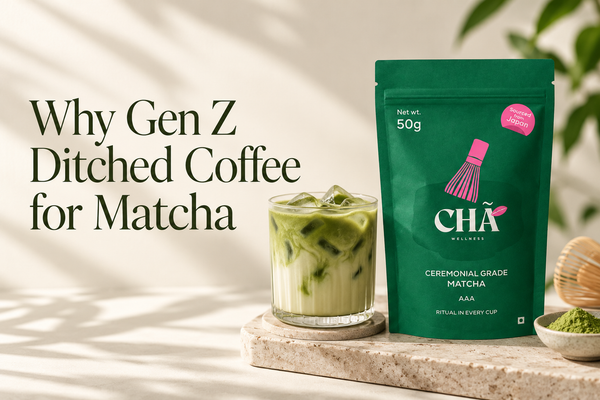
For decades, coffee has been the default answer to fatigue. Early mornings began with it. Long workdays depended on it. It became less of a choice and more of a habit.
But recently, something has shifted.
More people are reaching for matcha instead not because coffee disappeared, but because people began to question how they wanted their energy to feel.
They weren’t just looking for intensity anymore. They were looking for balance.
The Problem With Fast Energy
Coffee works quickly. Within minutes, it stimulates the nervous system, increasing alertness and temporarily reducing fatigue.
But this rapid stimulation often comes at a cost.
Many people experience jitters, restlessness, anxiety, or the familiar afternoon crash. This crash leads to another cup, and often another creating a cycle of temporary relief followed by deeper fatigue.
Over time, energy begins to feel unpredictable.
This is one of the main reasons people started exploring alternatives.
How Matcha Provides Energy Differently
Matcha contains caffeine, but its effect on the body is entirely different.
It also contains L-theanine, a naturally occurring amino acid that slows the absorption of caffeine. This creates a gradual release of energy rather than an immediate spike.
The result is sustained alertness that can last for several hours.
Instead of feeling overstimulated, people feel calm, clear, and focused.
Energy becomes stable rather than temporary.
A Better Experience for Focus and Productivity
One of the most noticeable differences people report after switching to Japanese Matcha is improved mental clarity.
Matcha supports concentration without the mental noise that often accompanies excess caffeine. It allows you to stay present with your work, rather than constantly seeking another boost.
This makes it especially valuable for modern lifestyles that require long periods of focus — whether it’s work, creative thinking, or daily responsibilities.
Supporting the Body, Not Just Stimulating It
Matcha is also rich in antioxidants, which help protect the body from oxidative stress and support overall wellness.
This makes matcha more than just an energy source. It becomes part of a routine that supports long-term health.
For many, this shift represents a broader change — from relying on quick fixes to choosing habits that work with the body.
Breaking the Cycle of Dependence

Coffee often creates a pattern of repeated consumption throughout the day. As energy rises and falls, more caffeine is needed to maintain productivity.
Matcha’s sustained energy helps reduce this cycle.
Many people find that a single serving is enough to support their morning or afternoon without needing constant refills.
Energy begins to feel reliable again.
A Shift Toward More Intentional Living
Beyond its physical benefits, matcha offers something else — a moment of pause.
Preparing matcha requires attention. The process itself slows you down, even briefly.
In fast-paced routines, this small ritual creates a sense of presence.
It transforms energy from something reactive into something intentional.
Why This Shift Matters
The move from coffee to matcha isn’t about replacing one drink with another.
It reflects a deeper shift in priorities.
People are no longer choosing energy based only on strength. They are choosing energy based on how it supports their focus, their health, and their daily experience.
Matcha offers energy that feels calmer, cleaner, and more sustainable.
And in a world that constantly demands more, organic matcha offers the kind of energy that makes all the difference.
Frequently Asked Questions
1. Should I drink matcha over coffee?
Choosing matcha over coffee is ideal if you want steady, balanced energy without jitters. Matcha contains caffeine but delivers calm focus and fewer crashes.
2. Is matcha way healthier than coffee?
Many prefer matcha over coffee because it contains antioxidants and L-theanine for smoother energy. Matcha contains caffeine, yet supports clarity without overstimulation.
3. Why are people replacing coffee with matcha?
People are switching from coffee to matcha for sustained energy and better focus. Matcha contains caffeine but provides a gradual release without the typical coffee crash.