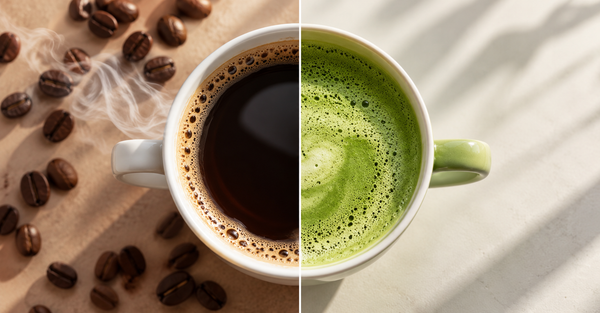
Both matcha and green tea come from the same plant but matcha wins on concentration. Since you consume the whole leaf, matcha may deliver up to 10x more antioxidants, more L-theanine, and more sustained energy than regular green tea. For focus, skin, and calm energy, research suggests matcha edges ahead.
Matcha vs Green Tea: What's the Difference?
Both come from the Camellia sinensis plant but matcha is shade-grown, stone-ground into a fine powder, and consumed as a whole leaf. Regular green tea is steeped and discarded. That one difference changes everything about their nutrition, taste, and how they make you feel.
Matcha vs Green Tea Benefits: Same Plant, Very Different Story
You've probably grown up sipping green tea. And now matcha is everywhere in lattes, skincare, and your favourite wellness girlie's morning routine.
So what's actually different? And when it comes to matcha vs green tea benefits, which one is actually better for you?
Both come from the same plant. Both are green. But the way matcha is grown, processed, and consumed makes it a completely different experience and that difference shows up in everything from your focus to your skin.
Let's break it down, no fluff.
What Is the Difference Between Matcha and Green Tea?
| Matcha | Green Tea | |
|---|---|---|
| Form | Fine powder | Loose leaf or bag |
| How consumed | Whole leaf | Steeped, leaves discarded |
| Growing method | Shade-grown | Sun-grown |
| Antioxidants | Up to 10x higher | Moderate |
| Caffeine | ~70mg per cup | ~30–50mg per cup |
| L-theanine | High | Moderate |
| Taste | Rich, umami, creamy | Light, grassy, mild |
The biggest difference? With matcha, you consume the entire leaf and nothing gets left behind.
Matcha vs Green Tea Benefits: What Does the Research Say?
Is matcha higher in antioxidants than green tea?
Yes, significantly. Research suggests matcha may contain up to 137x more EGCG (a powerful catechin antioxidant) than standard brewed green tea. This is because the whole leaf is consumed, not just an infusion.
EGCG is associated with:
- Supporting heart health
- Reducing oxidative stress
- Promoting healthy skin cell repair your skin will thank you
Does matcha give better focus than green tea?
Both contain L-theanine, an amino acid associated with calm alertness. But matcha contains more of it due to the shade-growing process, which boosts L-theanine production in the leaves.
Research suggests L-theanine combined with caffeine may support:
- Sustained attention
- Reduced mental fatigue
- Calm, focused energy. It's giving focus, no crash, no chaos
For a deeper dive, explore matcha for focus.
Is matcha better than green tea for skin?
Matcha's higher chlorophyll and antioxidant content may make it more effective at supporting skin from within. Research suggests antioxidants like EGCG may help protect against oxidative damage linked to dull, ageing skin.
Green tea also supports skin health but because matcha delivers a more concentrated dose of the same compounds, it may offer a stronger effect. Learn more about matcha for skin.
Benefits of Matcha vs Green Tea: Side by Side
What are the benefits of green tea?
- Rich in catechins and antioxidants
- May support heart health and healthy cholesterol levels
- Lower caffeine, great for sensitive individuals or evening sipping
- Light on the stomach
- Widely accessible and affordable
What are the benefits of matcha?
- May deliver up to 10x more antioxidants than green tea
- Higher L-theanine content for calm, sustained focus
- Chlorophyll-rich, associated with skin and detox support
- Whole leaf consumption means fuller nutrient absorption
- Research suggests it may support metabolism and healthy blood glucose levels (source: PMC, National Institutes of Health)
CHÃ tip: For daily wellness and clean energy, ceremonial matcha powder (AAA ) gives you the most concentrated form of these benefits.
Matcha vs Green Tea: Which Is Better for You?
Is matcha always better than green tea?
Not necessarily. It depends on what you're looking for:
- Choose green tea if you prefer a lighter caffeine hit, you're new to tea, or you enjoy sipping multiple cups through the day
- Choose matcha if you want more focus, more antioxidants, and a coffee alternative with no crash, no chaos energy
For those looking for the benefits of matcha vs green tea in one daily ritual, Japanese matcha sourced from Japan is the gold standard.
Is ceremonial grade matcha better than regular green tea?
Yes. Ceremonial grade is made from the youngest, most nutrient-dense leaves, shade-grown and stone-ground to preserve maximum L-theanine and EGCG. It's the purest, cleanest form of matcha available. CHÃ Wellness sources Ceremonial Grade AAA directly from Japan, no fillers, no additives.
Conclusion
Matcha vs Green Tea Benefits: The Verdict
Both are good. Matcha is more.
3 things to remember:
- Matcha and green tea come from the same plant but matcha delivers a more concentrated dose of every beneficial compound
- Research suggests matcha may offer up to 10x more antioxidants, more L-theanine, and stronger support for focus and skin than regular green tea
- For the cleanest, most potent matcha experience, ceremonial grade is the only grade worth sipping
When it comes to matcha vs green tea which is better, it's not a competition. It's an upgrade.
Shop CHÃ Wellness Ceremonial Grade AAA Matcha and make the switch your body will notice.
Frequently Asked Questions
Is matcha just powdered green tea?
Matcha is a type of green tea but not just powdered green tea. It is made from shade-grown leaves that are stone-ground into a fine powder. This specific growing and processing method gives matcha a higher concentration of antioxidants, L-theanine, and chlorophyll compared to regular green tea.
Which has more caffeine, matcha or green tea?
Matcha contains approximately 70mg of caffeine per serving, while regular green tea contains around 30–50mg. However, matcha's high L-theanine content balances the caffeine, producing calm, focused energy rather than a jittery spike.
Can I drink matcha every day instead of green tea?
Yes. Many people replace their daily green tea with matcha for a more concentrated wellness ritual. Research suggests regular consumption of matcha may support focus, antioxidant intake, and skin health. Start with 1 tsp per day and adjust to your preference.
Is matcha vs green tea which is better for weight management?
Both teas contain EGCG, which research associates with supporting metabolism and fat oxidation. Matcha's higher EGCG concentration may offer a stronger effect but neither is a substitute for a balanced diet and active lifestyle.
Does matcha taste like green tea?
They share the same base plant but taste very different. Green tea is light, grassy, and mild. Matcha is bold, creamy, and rich with umami depth. Ceremonial grade matcha is noticeably smoother and less bitter than lower-grade varieties.