Let's be upfront about something before we get into the recipe. No drink, matcha included, actually "detoxes" your body in the dramatic sense that word gets used online. Your liver and kidneys already handle that job quite well on their own. What matcha detox water genuinely offers is something simpler and honestly just as valuable, a refreshing way to drink more water, with a light antioxidant boost and a flavor that makes plain water feel a little more worth reaching for.
Why Matcha Infused Water Actually Works
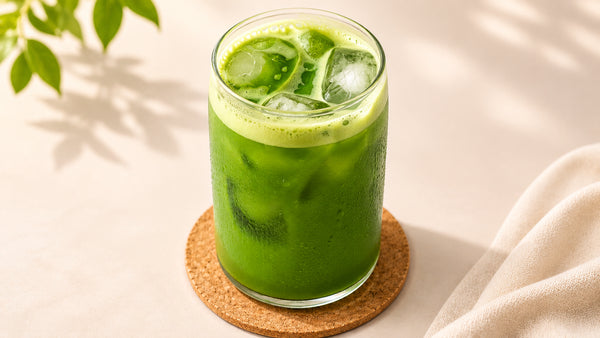
Matcha infused water isn't about steeping powder the way you would loose leaf tea. Instead, it's whisked matcha combined with cold water and a few fresh add ins, giving you a light, slightly earthy, subtly sweet drink that's far more interesting than plain water without being heavy or overly caffeinated.
What You Need for This Matcha Detox Water Recipe
- 1 teaspoon matcha powder
- A small splash of hot water, for whisking
- 4 cups cold water
- A handful of ice
- Optional add ins, cucumber slices, lemon slices, or fresh mint
Since this drink has no milk, sugar, or strong flavors to lean on, matcha needs to hold its own entirely by itself. A dull, lower grade powder can taste gritty or overly bitter once mixed into plain cold water, with nothing to soften it. A smooth Ceremonial Grade AAA Matcha infuses cleanly, giving a light, pleasant flavor rather than something sharp or chalky.
How to Make Matcha Detox Water, Step by Step
- Whisk the matcha powder with the hot water until completely smooth, no clumps
- Pour the whisked matcha into a pitcher with the cold water
- Add your choice of fresh add ins
- Stir well and refrigerate for at least 30 minutes to let the flavors settle
- Serve over ice
Cucumber Matcha Water
Cucumber is one of the most classic infused water pairings, and it works just as well here. Add a few thin cucumber slices to the pitcher along with the matcha, the cool, slightly sweet cucumber flavor pairs nicely with matcha's earthiness without overpowering it. This combination genuinely tastes more spa day than science experiment.
Matcha Lemon Detox Water
For something a little brighter and more citrus forward, add a few thin lemon slices instead, or alongside the cucumber. This matcha lemon detox water version leans slightly tart, a nice contrast if you find plain matcha water a touch too mellow on its own.
A Realistic Look at Matcha Hydration Benefits
Here's the honest version. This drink's real value is encouraging you to actually drink more water throughout the day, since a flavored water is genuinely easier to keep sipping than plain water for a lot of people. On top of that, matcha brings its own natural antioxidants and a small amount of calming caffeine along for the ride. That's a genuinely good combination, better hydration plus a light nutritional bonus, without needing to dress it up as anything more dramatic than that.
We've gone deeper into matcha's actual metabolism related benefits in Does Matcha Boost Metabolism, worth a read if you want the fuller picture beyond just this drink.
Making It Part of a Bigger Routine
If you're already building out a broader wellness routine around matcha, this is an easy, low effort addition alongside things like timing your matcha intake or pairing it with movement, both of which we cover in our Matcha Weight Loss Routine guide.
Frequently Asked Questions
Does matcha detox water actually detox your body?
Not in the literal sense. Your liver and kidneys already handle detoxification naturally. Matcha detox water's real benefit is encouraging better hydration alongside matcha's antioxidants, not a special toxin removing effect.
How long does matcha infused water last in the fridge?
It's best enjoyed within 24 hours for the freshest flavor, though it can be kept refrigerated for up to 2 days if needed.
Can I add other fruits to matcha detox water?
Yes, berries, orange slices, or mint all work well alongside or instead of cucumber and lemon, depending on what flavor profile you prefer.
Why does my matcha detox water taste bitter?
This usually comes down to matcha quality or too much powder used. A smoother, higher grade matcha and a lighter amount typically resolve this.