Most people come to matcha for the energy. They stay for everything else.
Gut health is one of those everything elses. And the research on matcha and digestion is more interesting than most people realise, not because it makes dramatic promises, but because the compounds in a good ceremonial grade cup are genuinely doing things in your digestive system worth understanding.
Here is what the science actually says.
Is Matcha Good for Gut Health?
Yes. Research suggests matcha supports gut health through its EGCG content, which studies have linked to healthier gut microbiome diversity, reduced gut inflammation, and improved digestive function. These effects are more pronounced in ceremonial grade matcha than culinary grade due to significantly higher catechin concentration.
The key compound here is EGCG, epigallocatechin gallate, a catechin antioxidant found in Camellia sinensis. What makes matcha different from brewed green tea is concentration. EGCG in matcha is 137 times more concentrated than in a standard cup of green tea. You are consuming the whole leaf, stone-ground, not just what diffuses through hot water in a few minutes.
That concentration matters when you are looking at gut health specifically. The research on EGCG and the gut microbiome points consistently in one direction: more of this compound appears to support the growth of beneficial bacteria while inhibiting pathogenic strains.
For more on what these compounds do across the board, benefits of drinking ceremonial grade matcha daily covers the full picture.

CHÃ WELLNESS · JAPANESE MATCHA
Discover AAA Matcha
Smooth, refined and approachable. Discover second-harvest Japanese matcha from Shizuoka.
SHOP NOWHow Does Matcha Affect Digestion?
Matcha supports digestion through two primary mechanisms: EGCG reduces gut inflammation and supports the intestinal lining, while L-theanine modulates stress hormones that directly affect digestive function. Many people report less bloating and more consistent digestion within the first few weeks of daily ceremonial grade matcha.
The stress-digestion connection is real and often overlooked. Cortisol and adrenaline directly slow digestive motility. L-theanine in matcha, approximately 34-46mg per 2g serving, works against that by promoting calm without sedation. Lower stress response means your gut is not constantly in a state of low-level emergency.
This is part of why the 92% of CHÃ customers who noticed better digestion within their first month are not just reporting a placebo effect. The compounds doing the work are specific, documented, and present in high concentration in ceremonial grade matcha.
The relationship between antioxidants in matcha and overall body function explains a lot of these downstream effects.
Matcha and the Gut Microbiome
Studies suggest EGCG in matcha acts as a prebiotic, selectively feeding beneficial gut bacteria including Lactobacillus and Bifidobacterium strains while reducing populations of harmful bacteria. A healthier microbiome ratio is associated with better digestion, immunity, and mood regulation.
A 2019 study published in the journal Nutrients found that green tea polyphenols, primarily EGCG, significantly altered gut microbiome composition in favour of beneficial species. Because matcha delivers polyphenols in whole-leaf form rather than infusion, the concentration reaching the gut is substantially higher.
This is not the same as taking a probiotic supplement. What EGCG appears to do is create better conditions for your existing beneficial bacteria to thrive, which is a different and arguably more sustainable approach than flooding the gut with external bacterial strains.
The processing matters here too. How matcha is made covers why stone-grinding at low temperature preserves these catechins intact, something that heat-processed or low-grade matcha cannot guarantee.
Does Matcha Help With Bloating?
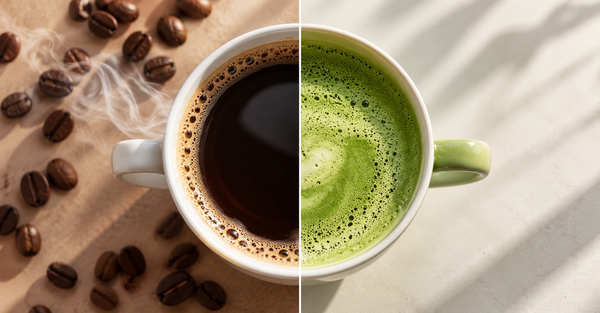
Matcha may help reduce bloating through its anti-inflammatory EGCG content and its effect on gut motility. Unlike coffee, which can irritate the stomach lining and cause bloating in sensitive individuals, matcha’s L-theanine moderates the caffeine response and tends to be gentler on the digestive system overall.
This is one of the most common things CHÃ customers report: switching from coffee to matcha and noticing a significant reduction in bloating and stomach discomfort. The comparison is not random.
Coffee is acidic and stimulates gastric acid production aggressively. Matcha contains approximately 60-80mg caffeine per 2g serving, but that caffeine is delivered alongside L-theanine, which buffers the physiological stress response. The result is a gentler digestive experience even though the caffeine content is comparable.
For anyone already thinking about making that switch, matcha over coffee covers every dimension of that comparison in detail.
If you want to experience this difference yourself, start with best matcha powder in India from CHÃ Wellness, ceremonial grade AAA, sourced directly from Japan, and see what a genuinely high-quality cup does for your digestion.
How Much Matcha Per Day for Gut Health?
One to two servings of ceremonial grade matcha per day is the range most research points to for gut health benefits. More than three servings daily adds caffeine without proportionally increasing gut benefit. Consistency matters more than quantity, daily drinking over weeks produces more noticeable digestive changes than occasional large amounts.
One cup in the morning is the most common starting point. Some daily drinkers add a second cup in the early afternoon. The best time to drink matcha covers timing in detail, including whether to drink on an empty stomach and when to avoid it.
The 95% of CHÃ customers who drink matcha four to six times per week are, without necessarily thinking about it, hitting the consistency threshold that research suggests is where gut health benefits become measurable.
Does Matcha Help With IBS?
Some research suggests EGCG’s anti-inflammatory properties may reduce IBS-related gut inflammation, and L-theanine’s stress-modulating effect can help with stress-triggered IBS episodes. However, matcha is not a treatment for IBS and individual responses vary significantly. Anyone managing IBS should consult a healthcare professional before making dietary changes.
This is worth addressing directly because it is one of the most searched questions in this category. The honest answer is: matcha is not a cure or a treatment. What it may do, based on available research, is support the gut environment in ways that reduce the frequency or intensity of symptoms for some people.
If you have IBS and are considering matcha, start with one small serving, about 1g in 100ml of water at 80°C, and monitor your response before moving to a full daily serving.
Why Ceremonial Grade Matters for Gut Health
Not all matcha delivers the same EGCG concentration. This is the part most brands do not want to tell you.
Culinary grade matcha is made from older leaves, harvested later, with lower L-theanine and EGCG content. The colour is yellower, the taste is bitter, and the compound concentration is a fraction of what ceremonial grade delivers.
If the reason you are drinking matcha is gut health, the grade is not a luxury consideration. It is a functional one. Lower grade means lower catechin content means less of the compound doing the actual work.
CHÃ sources exclusively Ceremonial Grade AAA matcha across its entire range, five cultivars, two origins in Japan, all first or second harvest. FSSAI certified, tested at origin.
Explore the full range of ceremonial grade matcha India and find the cultivar that suits your taste and your daily ritual.
Frequently Asked Questions
Is matcha good for gut health?
Yes. Research suggests EGCG in matcha supports beneficial gut bacteria growth, reduces gut inflammation, and improves digestive function. These effects are more pronounced with ceremonial grade matcha due to its significantly higher catechin concentration compared to culinary grade or brewed green tea.
Does matcha help with digestion?
Matcha supports digestion through EGCG, which reduces gut inflammation, and L-theanine, which moderates the stress hormones that slow digestive motility. Many people report improved digestion and less bloating within the first few weeks of drinking ceremonial grade matcha daily.
Matcha vs coffee for digestion, which is better?
Matcha is easier on the digestive system than coffee for most people. Coffee raises gastric acid production and can irritate the stomach lining. Matcha delivers a similar caffeine amount but with L-theanine moderating the response, producing less bloating, less acidity, and a smoother digestive experience overall.
How much matcha per day is good for gut health?
One to two servings of ceremonial grade matcha daily is the range research points to. Consistency over weeks matters more than the quantity in a single day. CHÃ’s ceremonial grade matcha AAA is designed for daily drinking, with each sachet delivering a precisely measured serving.
Does matcha help with bloating?
Matcha may reduce bloating through its anti-inflammatory EGCG content and its gentler effect on the digestive system compared to coffee. L-theanine moderates the stress response that contributes to gut tension and bloating. Individual results vary, but daily ceremonial grade matcha is one of the most commonly reported dietary changes for bloating reduction.
Disclaimer : The health information in this blog is for educational purposes only and is not a substitute for medical advice. Claims about EGCG, L-theanine, and other compounds are based on published research and verified sources. Individual responses vary. People with specific health conditions should consult a qualified healthcare professional before making dietary changes. CHÃ Wellness does not make any therapeutic or medicinal claims about its products.