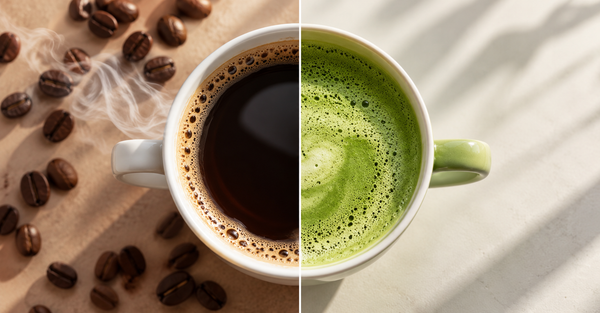
You are standing in your kitchen. It is 7am. You have two choices staring back at you: a warm cup of coffee or a bowl of whisked matcha. Both promise to wake you up. Only one of them is telling the whole truth.
Everyone talks about matcha vs coffee caffeine content like it is a simple contest. More caffeine wins, less caffeine loses. But that is not really how your body works, and it is definitely not how these two drinks feel once they hit your bloodstream.
So let's actually break it down. Real numbers, real comparisons, and the one factor most people forget to mention.
The Quick Answer
A typical cup of matcha (1 to 2 grams of powder) contains around 60 to 70mg of caffeine. A regular cup of drip coffee contains anywhere from 95 to 200mg, depending on how it is brewed. So gram for gram, matcha actually holds more caffeine than coffee. But cup for cup, coffee usually wins on raw milligrams, mostly because you use more coffee per serving than you do matcha.
Confusing? Stick with us. It gets clearer.
How Much Caffeine Does Matcha Have
Matcha is not steeped and discarded like a regular tea bag. You are whisking the entire ground leaf into your water, which means you are drinking everything the leaf has to offer, caffeine included.
The strength of that whisk also comes down to quality. A true Ceremonial Grade Matcha ( AAA )is stone ground from shade grown leaves, which is part of why it delivers a cleaner, more consistent lift than lower grade powders that are often cut or blended.
Here is what that looks like in numbers:
- 1 gram of matcha powder: roughly 19 to 44mg of caffeine
- A standard 2 gram serving: roughly 60 to 70mg of caffeine
- A stronger café style matcha latte (3 to 4 grams): can edge toward 90 to 140mg
Compare that to green tea made the traditional way, where the leaves are steeped and removed. A regular cup of steeped green tea gives you closer to 20 to 30mg. Matcha wins that comparison easily, simply because you are consuming the whole leaf instead of a weak infusion of it.
Caffeine in Matcha vs Coffee, Side by Side
|
Drink |
Typical Serving |
Caffeine (mg) |
|
Matcha (whisked bowl) |
1 to 2g powder |
60 to 70mg |
|
Drip coffee |
8oz cup |
95 to 200mg |
|
Espresso shot |
1oz |
60 to 75mg |
|
Instant coffee |
8oz cup |
30 to 90mg |
|
Steeped green tea |
8oz cup |
20 to 30mg |
Look closely and you will notice something interesting. A single espresso shot and a bowl of matcha are almost neck and neck. It is drip coffee, the everyday office pot kind, that pulls ahead by a wide margin, simply because of how much ground coffee goes into a standard brew.
Matcha vs Espresso Caffeine
This one surprises people the most. Espresso has a reputation for being the strongest thing you can order, and in terms of intensity, it kind of is. But per serving, matcha vs espresso caffeine is closer than you would think. Both land somewhere around 60 to 75mg per serving.
The real difference is not the number. It is the ride.
Matcha vs Coffee Energy Comparison
Here is the part the milligram chart does not tell you. Caffeine is only half the story.
Matcha contains something coffee does not have in any meaningful amount: L-theanine, a naturally occurring amino acid that promotes calm, focused alertness. When caffeine and L-theanine show up together, your body absorbs the caffeine more slowly and steadily, instead of all at once.
Coffee hits fast. You feel it within minutes, it peaks hard, and for a lot of people, it comes down just as fast. That crash around 11am? That is coffee's caffeine leaving your system quicker than it arrived.
Matcha takes a slower road. The energy builds gradually and tends to hold for longer, often 4 to 6 hours, without the sudden spike or the sudden drop. This is why so many people describe matcha energy as calm, clear, and steady, while coffee energy gets described as sharp, urgent, and short lived.
Neither is wrong. It genuinely depends on what your day needs. Writing a paper that requires 3 hours of deep focus? Matcha's steady curve might serve you better. Need an immediate jolt before a 9am meeting you are already late for? Coffee is built for exactly that.
If you want to understand more about why people are making that switch in the first place, we have gone deep into it here: Why More People Are Choosing Matcha Over Coffee.
Does Matcha Have More Caffeine Than Coffee
Short answer, not usually, but it depends entirely on how each one is prepared.
Gram for gram, matcha edges out coffee. But because a standard cup of coffee uses far more ground coffee than a bowl of matcha uses powder, coffee typically delivers more total caffeine per cup. The exception is espresso, which is small, concentrated, and lands almost exactly where matcha does.
So if you're trying to cut down on caffeine without giving up your ritual completely, switching a drip coffee habit to a matcha habit is one of the easier ways to actually lower your daily intake, even though matcha still has caffeine in it.
So, Which One Actually Wakes You Up?
Coffee wakes you up faster. Matcha keeps you awake longer, and does it more gently.
If you need speed, coffee delivers it every time. If you want something that lasts through a long study session, a slow morning, or a full workday without the 3pm crash, matcha's steady release might be the better fit.
At CHÃ, we are not here to tell you coffee is the enemy. We are here to tell you the whole truth about what is actually in your cup, so you can choose what your body actually needs that day.
If you are curious enough to actually make the switch, or just want to try that steady, no crash energy for yourself, the CHÃ Ritual Matcha Kit comes with everything you need to whisk your first bowl properly.
Frequently Asked Questions
Is matcha stronger than coffee?
Not in raw caffeine content, but matcha's effects last longer. A cup of matcha holds around 60 to 70mg of caffeine compared to 95 to 200mg in drip coffee, but matcha's L-theanine content makes the energy feel steadier and last longer without a crash.
How long does matcha caffeine last?
Matcha's caffeine tends to release gradually and can provide sustained energy for 4 to 6 hours, compared to coffee's faster peak and quicker drop off within 2 to 3 hours.
Does matcha have more caffeine than coffee?
Gram for gram, matcha has more caffeine than coffee beans. But because a standard coffee serving uses more grounds than a standard matcha serving uses powder, a regular cup of coffee usually ends up with more total caffeine than a bowl of matcha.
Can I switch from coffee to matcha for caffeine?
Yes. Many people switch from coffee to matcha to get a gentler, longer lasting form of caffeine without the jitters or afternoon crash that coffee is known for. It is a good option if you are trying to reduce sudden caffeine spikes while still staying alert through the day.
Disclaimer : This article is for general information only and is not a substitute for medical advice. If you have concerns about your caffeine intake, please speak with a healthcare professional.