Most people discover matcha and stop at one variety. They find something they like and stick with it. But there is a point in every serious matcha drinker’s journey where they come across Gokou, try it once, and realise they had been drinking with the volume turned down.
What is Gokou matcha? It is a single-origin cultivar grown exclusively in Uji, Kyoto Prefecture, Japan. First harvest. Shade-grown for 20-30 days before picking. Stone-ground into a fine powder with a flavour profile that is bolder, deeper, and more umami-forward than almost anything else in the ceremonial grade category.
If you have been drinking matcha for a while and want to understand what this cultivar actually is, where it comes from, and why it sits at the top of most serious drinkers’ lists, this is the blog for you.
What Is Gokou Matcha?
Gokou is a Japanese matcha cultivar bred specifically for the Uji region of Kyoto Prefecture. It is a first harvest ceremonial grade variety known for its deep vegetal richness, pronounced umami, and naturally bold flavour that holds its own both as a straight bowl and in milk-based drinks.
The name Gokou (五香) translates loosely to “five fragrances” in Japanese, which gives you a hint at the aromatic complexity this cultivar carries. It was developed through selective breeding to perform at the highest ceremonial grade level, and it does exactly that.
Unlike broader regional terms like “Uji matcha” (which covers multiple cultivars grown across the Uji area), Gokou is a specific variety, identifiable by its cultivar name. When you see Gokou on a label, you know exactly which plant you are getting, where it was grown, and roughly what to expect in the cup.
This specificity is part of what makes single-origin matcha worth exploring. You are not buying a category. You are buying a particular expression of one plant, from one place.
Where Does Gokou Matcha Come From?
Gokou matcha is grown in Uji, Kyoto Prefecture, one of Japan’s oldest and most respected matcha-producing regions. Uji’s combination of river mist, mineral-rich soil, and centuries of cultivation expertise creates ideal conditions for producing matcha with exceptionally high L-theanine concentration and complex flavour.
To understand what is uji matcha and why the region matters so much, you have to look at the geography. Uji sits between mountain ranges that trap cool air and morning mist from the Uji River. That temperature differential, combined with the shade-growing process, is what drives L-theanine production in the Camellia sinensis plant.
Shade-growing works like this: when the plant is blocked from sunlight for 20-30 days before harvest, it redirects energy from photosynthesis into producing amino acids, primarily L-theanine and chlorophyll. The result is a leaf that is darker, sweeter, and richer in the compounds that make ceremonial grade matcha what it is.
Gokou is harvested once a year during the first flush, typically between late April and early May. That timing matters. First harvest leaves carry the highest concentration of nutrients built up over winter. Everything the plant stored through the cold months comes through in that first pick.
What Does Gokou Matcha Taste Like?
Gokou matcha has a bold, full-bodied flavour profile with deep umami, a slight natural sweetness, and a finish that lingers. It is richer and more intense than most ceremonial grade varieties, with a vivid green colour that reflects its high chlorophyll content from extended shade-growing.
The easiest way to describe it: if most ceremonial grade matcha is a conversation, Gokou is a statement.
The umami is the first thing you notice. It is pronounced but not overwhelming, the kind of depth that tells you immediately this is not culinary grade. Behind it comes a natural sweetness, earthy and clean, with no bitterness when prepared correctly.
The colour is a deep, almost emerald green. Much darker than lower-grade matcha. That colour is chlorophyll, and it is a reliable visual indicator of quality and shade-growing time.
This is not a subtle cup. If you are new to matcha and want something gentle to start with, what is okumidori matcha covers a smoother, more approachable Shizuoka cultivar. Gokou is for when you want the full experience.
CHÃ WELLNESS · JAPANESE MATCHA
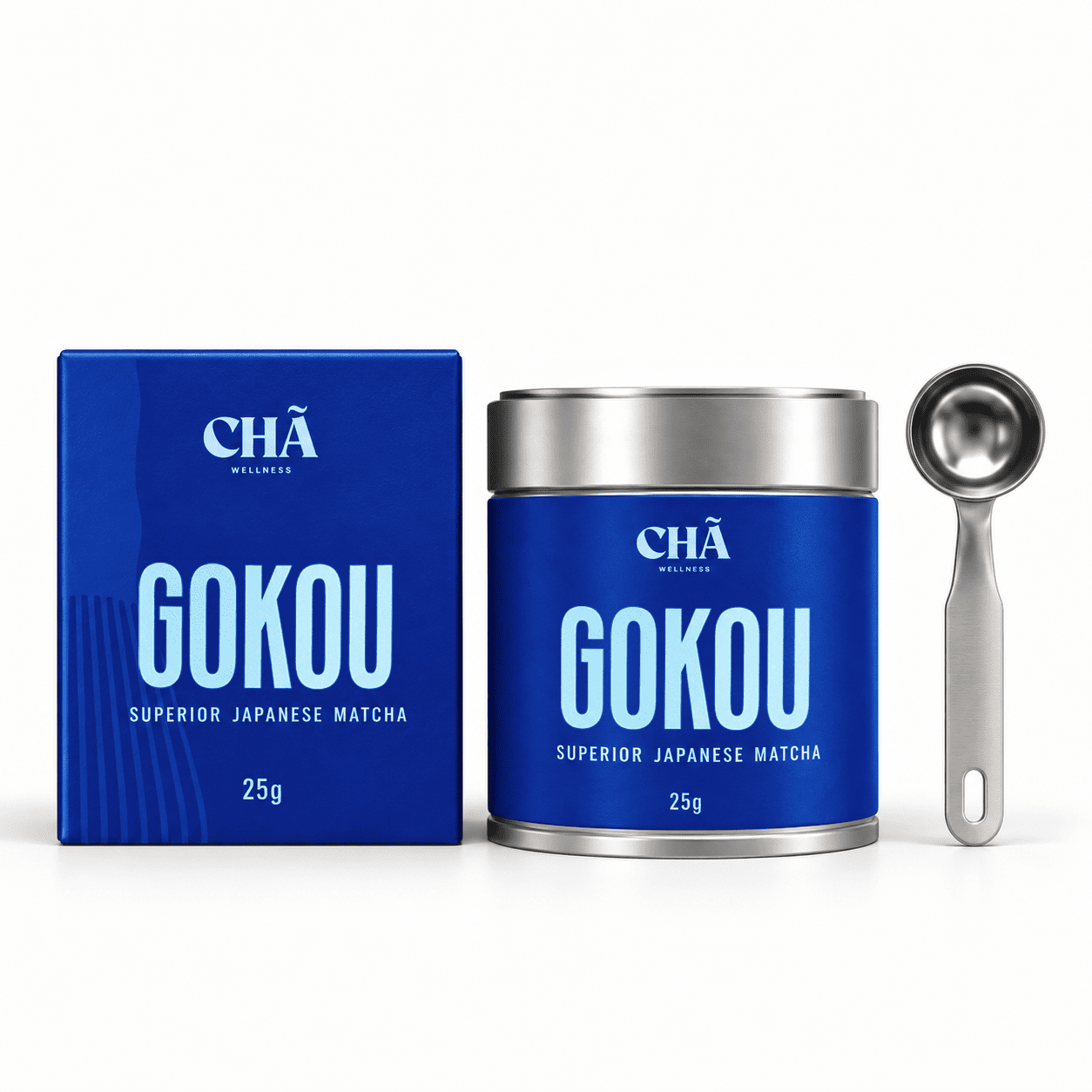
Discover Gokou Matcha
Rich, full-bodied and deeply umami. Explore Japanese matcha from CHÃ Wellness.
SHOP NOWGokou vs Other Matcha Cultivars
| Gokou | Okumidori | |
|---|---|---|
| Origin | Uji, Kyoto | Shizuoka |
| Harvest | First harvest | First harvest |
| Flavour | Bold, deep umami | Smooth, full-bodied |
| Colour | Deep emerald green | Bright green |
| L-theanine | Very high | High |
| Best for | Straight bowl, experienced drinker | Everyday ceremonial, wider palates |
| Bitterness | Low when prepared right | Very low |
Gokou sits at one end of the ceremonial grade spectrum. Bold, complex, specific. It rewards the drinker who wants to taste what matcha can actually be when every variable, cultivar, region, harvest, processing, is handled with precision.
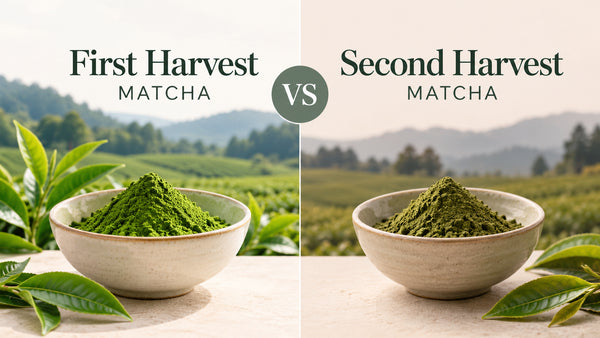
Understanding first harvest vs second harvest matcha gives you the full picture of why harvest timing is as important as cultivar when you are evaluating quality.
Gokou matcha contains some of the highest L-theanine concentrations available in the ceremonial grade category. As a first harvest cultivar from an extended shade-growing period, the amino acid profile is significantly richer than second harvest or culinary grade matcha, delivering calm, sustained focus without a caffeine crash.
Ceremonial grade matcha contains approximately 34-46mg of L-theanine per 2g serving. For a first harvest cultivar like Gokou, that sits toward the higher end of that range. L-theanine works by modulating the absorption of caffeine, producing alertness without the jittery spike that coffee typically causes.
Matcha also contains approximately 60-80mg of caffeine per 2g serving, alongside EGCG, an antioxidant catechin present in matcha at concentrations 137 times higher than in brewed green tea. That combination, L-theanine plus EGCG plus moderate caffeine, is what makes ceremonial grade matcha a genuinely different experience from any other caffeinated drink.
The uji matcha benefits go beyond just flavour. The region’s growing conditions actively contribute to the nutritional density of what ends up in your cup.
For more on how these compounds work and what the research says, benefits of drinking ceremonial grade matcha daily covers the science in detail.
If you want to try Gokou and experience that L-theanine difference directly, CHÃ sources its Gokou matcha as a first harvest single-origin from Uji Kyoto, FSSAI certified and nitrogen-flushed to preserve potency from Japan to your cup.
How to Prepare Gokou Matcha
Gokou matcha is best prepared as a traditional bowl using 1.5 to 2 grams of powder, 70-80ml of water at 70-80°C, and a bamboo whisk. At this temperature and ratio, the umami opens fully and the natural sweetness comes through without any bitterness.
A few things to get right:
Water temperature is the most common mistake. Boiling water destroys L-theanine and makes any ceremonial grade matcha taste bitter. 70-80°C is the range for Gokou specifically. If you do not have a thermometer, boil and let it sit for 4-5 minutes.
Sift the powder first. Gokou is stone-ground to a very fine particle size. Sifting prevents clumping and gives you a smoother bowl.
Whisk in a W or M motion, not circular. This creates fine foam across the surface and fully incorporates the powder.
No sweetener for the first cup. Gokou’s umami and sweetness are part of the experience. Sweetener masks what makes this cultivar worth drinking.
Who Is Gokou Matcha For?
Gokou matcha is best suited for experienced matcha drinkers who want depth, complexity, and the full expression of a first harvest ceremonial grade cultivar. It is not an entry-level cup, but it is exactly what a serious drinker reaches for when they want something that delivers on every level.
If you are new to matcha and still building your palate, start with something like CHÃ’s ceremonial grade matcha and work your way up. If you already drink matcha regularly and want to understand what a single-origin Uji Kyoto first harvest cultivar actually tastes like, Gokou is the answer.
It also works exceptionally well in matcha lattes. The bold umami cuts through milk without disappearing, which is a problem with milder cultivars when you add volume and fat. If your lattes have been tasting thin, the cultivar is usually the reason.
For storage, the same rules apply as any premium ceremonial grade. How to store matcha powder covers the full protocol. The short version: airtight, away from light and heat, consumed within 4-6 weeks of opening for peak flavour.
Why CHÃ Sources Gokou From Uji Kyoto
CHÃ Wellness spent time at origin in Japan, visiting farms and tasting over 12 varieties before selecting the range now available in India. Gokou was chosen specifically because of its first harvest profile, its cultivar-specific intensity, and its ability to hold its character whether drunk as a straight bowl or in a latte.
Every batch arrives nitrogen-flushed in airtight sachets, preserving the L-theanine, EGCG, and chlorophyll that make first harvest Gokou what it is. FSSAI certified, tested at origin for purity and heavy metals.
Over 2000 customers have rated CHÃ matcha five stars. 89% report sustained energy without a crash. 95% drink it four to six times a week. That is not marketing. Those are numbers from a post-purchase survey of 3000+ customers.
Explore the full range of single origin matcha India from CHÃ Wellness, five cultivars, two origins, two harvests, one grade: Ceremonial Grade AAA.
Frequently Asked Questions
What is Gokou matcha?
Gokou is a Japanese matcha cultivar grown in Uji, Kyoto Prefecture. It is a first harvest ceremonial grade variety known for its bold, deep umami flavour, high L-theanine concentration, and vivid emerald green colour. It is one of the most distinctive cultivars in the ceremonial grade category.
What does Gokou matcha taste like?
Gokou matcha has a bold, full-bodied flavour with pronounced umami and a natural sweetness that lingers. It is richer and more intense than most ceremonial grade varieties. When prepared at the right water temperature (70-80°C), there is no bitterness, only depth.
Is Gokou matcha good for daily use?
Yes, though it is more intense than everyday cultivars. Daily drinkers who prefer a bold cup will find Gokou ideal. Those who want something smoother for daily use might prefer a second harvest variety like House Matcha, which is designed specifically for consistent daily drinking.
How is Gokou different from Okumidori matcha?
Both are first harvest ceremonial grade, but they come from different origins. Gokou is from Uji Kyoto and has a bolder, more intense umami profile. Okumidori is from Shizuoka and is smoother and more approachable. Gokou is for the experienced drinker; Okumidori suits a wider range of palates.
Where can I buy Gokou matcha in India?
CHÃ Wellness sources Gokou matcha directly from Uji Kyoto as a first harvest, single-origin ceremonial grade variety. It is available at chawellness.in, FSSAI certified, and available across India. If you want to explore the full range, the CHÃ collection includes five cultivars across two Japanese origins.