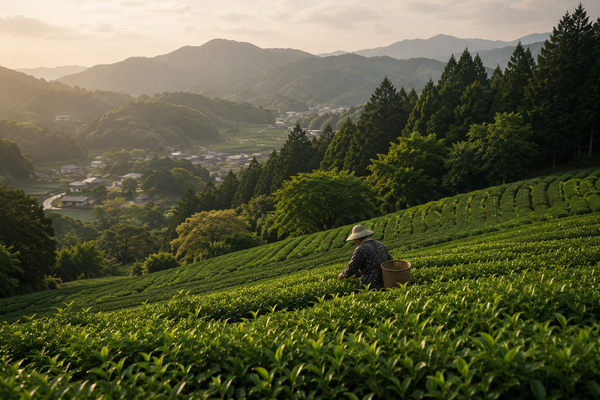
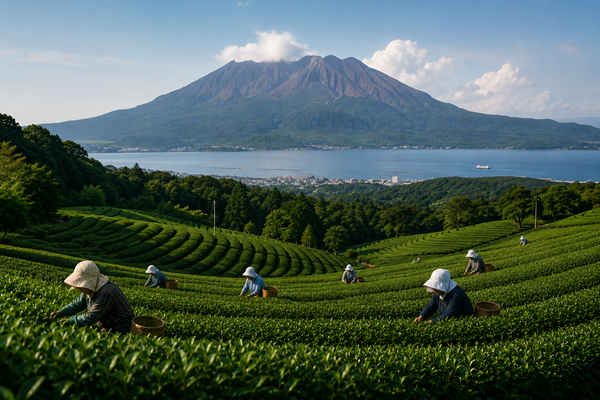
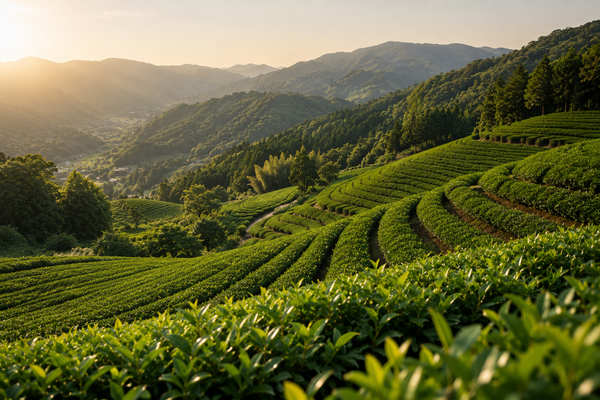
Authentic Japanese matcha powder is ceremonial grade green tea powder produced exclusively in Japan from shade-grown tencha leaves, stone-ground at slow speed to preserve colour, nutrients, and flavour. It is characterised by a vivid emerald green colour, a naturally sweet umami flavour with minimal bitterness, a fine silky texture, and a verifiable Japanese origin with specific regional sourcing. Anything that does not meet these criteria regardless of what the label says is not genuine authentic matcha powder.
The problem in 2026 is real and growing. With the global matcha market surging, store shelves have filled with powders that share a name and almost nothing else. Chinese green tea powder, low-grade Japanese culinary powder, and blended products are routinely labelled as ceremonial grade authentic Japanese matcha powder and most buyers have no reliable way to tell the difference.
This guide gives you that way.
Why Authenticity Matters More Than Ever
Authenticity in authentic Japanese matcha powder matters because genuine Japanese matcha and imitation green tea powder are chemically, nutritionally, and experientially different products. The amino acid profiles, the colour stability, and the flavour complexity of properly produced Japanese matcha are measurably different from alternatives. When you buy fake or low-grade matcha, you are not just getting a worse taste, you are getting a fundamentally different product that does not deliver what real matcha promises.
The specific cultivation technique growing Camellia sinensis under shade structures for 20 or more days before harvest, then steaming, drying, and stone-milling the leaves was developed and refined in Japan over centuries. While China, South Korea, and other countries now produce green tea powder, Japanese matcha has distinct characteristics that result from this specific process.
The result of genuine production is vivid green colour, umami-rich flavour, and the characteristic covered aroma that defines premium authentic matcha powder. The result of imitation production is a dull, bitter, flat powder that shares only the name.
CHÃ Wellness was built specifically to solve this problem for Indian buyers sourcing only verified, genuine authentic Japanese matcha powder directly from Japanese farms with full traceability at every stage.
The 5 Ways to Identify Authentic Japanese Matcha Powder
1. Colour : The First and Most Reliable Test
Genuine authentic Japanese matcha powder is a vivid, bright emerald green. Not yellow-green. Not olive. Not dull. The vibrancy of the green is a direct indicator of chlorophyll concentration which is itself a direct indicator of proper shade-growing technique and fresh processing. Dull, yellowish, or brownish powder has either oxidised, been processed incorrectly, or is not Japanese matcha at all.
This is the easiest test and the one that never lies.
Hold a small amount of authentic matcha powder against a white background in natural light. Real Japanese matcha is an unmistakable, saturated emerald green that looks alive. Every batch that leaves CHÃ Wellness passes this colour test before it reaches a tin vivid green is not a cosmetic standard at CHÃ. It is a quality indicator for everything that matters inside the powder.
Fake matcha, Chinese green tea powder, and oxidised low-grade Japanese powder all share one visual characteristic: they are dull. The green is flat, lifeless, and unconvincing. If the colour does not stop you, the matcha is not authentic.
2. Origin : Verify the Specific Region, Not Just the Country
Genuine authentic Japanese matcha powder comes from a specific region named Uji in Kyoto, Yame in Fukuoka, Nishio in Aichi, or Kagoshima in Kyushu. "Product of Japan" alone is not sufficient verification. The best matcha comes from regions like Uji, Yame, and Nishio, where centuries-old farming techniques and ideal growing conditions create matcha with a deep, vibrant green colour, natural sweetness, and rich umami. A brand that cannot name the specific region it sources from is either blending from multiple unverified sources or obscuring an origin it does not want you to know.
Ask for the specific prefecture. Ask for the farm or cooperative name where possible. Ask whether the matcha is single-origin or blended. A brand selling genuine authentic Japanese matcha powder will answer all of these questions specifically and without hesitation.
CHÃ Wellness sources directly from verified Japanese farms specific origin, specific processing method, full traceability. The answer to every one of those questions is documented before a single gram reaches a CHÃ sachet.
3. Taste : The Test That Cannot Be Faked
Genuine authentic Japanese matcha powder tastes naturally sweet with a clean umami depth and only a mild, pleasant background bitterness when prepared correctly at 80°C in plain water. If the dominant experience is harsh bitterness, flatness, or a grassy astringency that makes you want to add sweetener immediately the matcha is not authentic Japanese ceremonial grade regardless of what the label claims.
Whisk one teaspoon of the matcha with 60 to 80ml of water at exactly 80°C never boiling, which destroys L-theanine and amplifies bitterness regardless of grade. Taste it plain before adding anything. Real authentic Japanese matcha powder is smooth, naturally sweet, and satisfying in plain water without any addition. Fake or low-grade matcha is not.
CHÃ Wellness matcha passes this test in plain water every time. That is the standard authentic Japanese matcha powder is held to and the standard CHÃ refuses to compromise on.
4. Texture : Fine, Silky, and Clump-Free
Genuine authentic Japanese matcha powder is stone-ground to an extremely fine particle size around 5 to 10 microns producing a silky, almost weightless texture that whisks smoothly in water and dissolves completely without grit. Imitation matcha or low-grade powder is typically machine-milled to a coarser particle size, producing a grainy texture that clumps persistently and never fully dissolves.
Stone-grinding is slow, low-heat, and labour-intensive producing the fine particle size that genuine authentic Japanese matcha powder requires. Jet-milling and machine-grinding produce coarser particles that behave differently in water and taste different in the cup.
Rub a small amount of authentic matcha powder between your fingers. Real Japanese ceremonial grade feels almost like a fine face powder impossibly smooth, with no graininess. Fake or culinary grade matcha feels noticeably coarser. This texture test takes five seconds and never lies.
5. Sourcing Transparency : What a Brand That Sells Real Matcha Can Tell You
A brand selling genuine authentic Japanese matcha powder can answer specific questions about origin, harvest, processing, and testing without hesitation. Quality brands focus on sourcing transparency and authenticity directly sourcing from manufacturers and guaranteeing freshness. A brand that deflects, gives vague answers, or relies entirely on label claims without supporting documentation is a brand worth questioning.
Here are the five questions every buyer of authentic matcha powder should ask:
Where specifically in Japan does this come from? The answer should name a prefecture and ideally a region within it Uji, Yame, Nishio, Kagoshima. "Japan" alone is not an answer.
What harvest is this from? First flush (ichibancha) is the standard for ceremonial grade authentic Japanese matcha powder. Second flush and beyond is culinary grade. If the brand does not know or does not distinguish, that tells you something important.
How is it processed? Stone-ground is the correct answer for genuine authentic matcha powder. Jet-milled or machine-ground produces a coarser, lower-quality powder regardless of the leaf quality going in.
How fresh is it? Matcha degrades quickly after grinding. Brands that stone-grind in small batches and pack to order produce fresher authentic Japanese matcha powder than brands that bulk-grind and warehouse. Ask when the current stock was ground.
Is there a test report available? The difference between a quality tin and a substandard one comes down to measurable factors that happen on the farm and at the stone mill, before the powder ever sees a label. Brands that test for heavy metals, pesticide residue, and colour values and publish those results are operating at the standard genuine authentic Japanese matcha powder deserves.
CHÃ Wellness answers all five of these questions specifically for every batch. That transparency is not a marketing claim, it is the operational standard that genuine sourcing demands.
The Fake Matcha Problem in India Specifically
The fake matcha problem is particularly significant in India because the category is still developing and most buyers do not yet have a baseline experience of genuine authentic Japanese matcha powder to compare against. Fluorescence spectroscopy and machine learning-based origin identification have demonstrated about 93% accuracy in distinguishing genuine Japanese matcha from matcha of other origins. In the absence of that technology, the five tests above are the buyer's best protection.
The most common forms of fake or misrepresented authentic matcha powder in India:
Chinese green tea powder labelled as matcha China produces significant quantities of green tea powder that is sold as matcha in markets where buyers cannot easily verify origin. The colour is typically duller, the flavour is more bitter and flat, and the L-theanine content is significantly lower than genuine Japanese matcha.
Low-grade Japanese culinary powder sold as ceremonial grade Culinary grade matcha from Japan is a legitimate product designed for baking and cooking. It becomes fraudulent when labelled as ceremonial grade at ceremonial grade prices. The colour, taste, and L-theanine content are measurably inferior.
Blended matcha with unverified origins Some brands blend Japanese matcha with Chinese powder or lower-grade material to reduce cost while maintaining a "Japanese matcha" claim. Without specific regional sourcing documentation, this blend is indistinguishable from single-origin Japanese matcha on the label.
CHÃ Wellness exists in India specifically to provide genuine authentic Japanese matcha powder with full origin transparency, a direct response to the sourcing opacity that has defined too much of the Indian matcha market.
What CHÃ Wellness Does Differently
CHÃ Wellness sources exclusively from verified Japanese farms with specific regional origin, confirmed first-flush harvest, stone-ground processing, and full quality documentation applying every standard described in this guide to every batch before it reaches a CHÃ tin. The matcha powder CHÃ delivers to India is not claimed to be authentic. It is verifiably authentic at every stage of the supply chain.
CHÃ Wellness was built around a single non-negotiable commitment that every Indian buyer who wants genuine authentic Japanese matcha powder should have access to it without having to navigate sourcing opacity, misleading labels, or compromised grades.
Every check in this guide colour, origin, taste, texture, sourcing transparency CHÃ Wellness passes. Not because these are claims. Because these are the operational requirements that genuine authentic Japanese matcha powder sourcing demands, and CHÃ has built its entire supply chain to meet them.
If you are ready to taste what genuine authentic matcha powder actually is, explore the full range of matcha powder in India from CHÃ Wellness and start with a cup that meets every standard in this guide.
When you are evaluating the best matcha powder in India and comparing options, use every test in this guide as your benchmark colour, origin, taste, texture, and sourcing transparency together tell the full story.
Frequently Asked Questions
What is authentic Japanese matcha powder?
Authentic Japanese matcha powder is ceremonial grade green tea powder produced exclusively in Japan from shade-grown tencha leaves, stone-ground at slow speed to preserve colour, nutrients, and flavour. Characterised by vivid emerald green colour, naturally sweet umami flavour with minimal bitterness, fine silky texture, and verifiable Japanese regional origin. Any powder that does not meet these criteria is not genuine authentic matcha powder regardless of how it is labelled.
What is the difference between authentic Japanese matcha and fake matcha?
Genuine authentic Japanese matcha powder is produced from shade-grown first-flush Japanese tencha, stone-ground to a fine particle size, with high L-theanine content producing natural sweetness and a vivid emerald colour. Fake matcha, typically Chinese green tea powder or low-grade Japanese culinary powder, is produced differently, tastes harsher and flatter, has lower L-theanine content, and is a noticeably duller green. The difference is immediately visible and immediately tasted.
How do I identify authentic Japanese matcha powder by colour?
Genuine authentic Japanese matcha powder is a vivid, saturated emerald green that looks bright and alive against a white background. Dull, olive, yellow-green, or brownish powder has either oxidised, been processed incorrectly, or is not authentic Japanese matcha. The vibrancy of the green is a direct indicator of chlorophyll concentration and freshness, the single most reliable visual test available.
Where can I buy authentic Japanese matcha powder in India?
When buying authentic Japanese matcha powder in India, look for brands that name a specific Japanese region on the packaging, confirm first-flush sourcing and stone-ground processing, offer test documentation, and provide full sourcing transparency. CHÃ Wellness sources verified the best authentic Japanese matcha powder directly from Japan with full traceability, the same standard described in every test in this guide.